
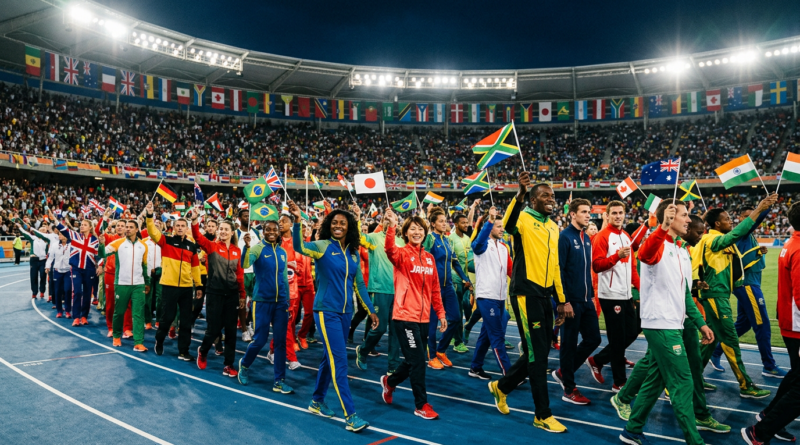
OCA Warns India: Asian Games Entries Capped
OCA Warns India: Asian Games Entries Capped
The Olympic Council of Asia (OCA) has issued a clear directive, warning India and other National Olympic Committees (NOCs) that there is ‘no more room’ for additional entries beyond the established quotas for the upcoming Asian Games. This stern message, as reported by Rediff, underscores the OCA’s firm stance on adhering to entry limits, directly impacting nations aspiring to send large contingents.
This development comes as various NOCs, including India, are finalising their teams for the prestigious multi-sport event. The OCA’s uncompromising position means that any athlete or team not falling within the specified quotas will not be accommodated, regardless of their performance potential or national significance. This directive aims to ensure administrative efficiency and fair play within the framework of the Games.
Key Insights: Impact on India’s Medal Aspirations
For a nation like India, which harbours ambitious goals of significantly improving its medal tally at the Asian Games, this directive presents a substantial administrative challenge. India has often sought to send its largest-ever contingents to major events, reflecting growing national pride and investment in sports. The ‘no more room’ policy necessitates stringent and transparent selection processes by the Indian Olympic Association (IOA) and individual National Sports Federations (NSFs).
Analysts suggest that this could force federations to make difficult choices, prioritising athletes who have not only met but significantly surpassed qualifying marks, or those with a proven track record of world-class performance. This focus on quality over quantity, while potentially reducing the overall size of the contingent, could also sharpen India’s competitive edge, ensuring that only the most promising medal prospects represent the nation. The holistic development of athletes, from grassroots to elite levels, now faces the ultimate test of international standards.
Administrative Challenges and Multi-Sport Dynamics
The OCA’s warning puts immense pressure on NSFs to meticulously review their provisional entries. Each sport, from athletics and shooting to team events like hockey and basketball, operates under specific quota rules. The IOA, in coordination with these federations, must navigate these complexities to ensure compliance while optimising India’s representation across various disciplines. This scenario highlights the critical role of robust internal qualifying systems, where athletes are measured against not just national but also international benchmarks, including world records where applicable.
The meticulous adherence to these entry caps is vital for maintaining the prestige and integrity of the Asian Games. It compels federations to focus on athletes who are genuinely capable of competing at the highest level, fostering a culture of excellence. The journey of every athlete, from qualification to potential podium finish, becomes even more significant under such strict guidelines.
Why This Matters in the Long Run
In the long run, this firm stance by the OCA serves as a crucial reminder for India’s sporting ecosystem to institutionalise early, rigorous, and transparent selection policies. It underscores the need for NSFs to develop a deeper pool of talent that consistently meets and exceeds international qualifying standards, rather than relying on last-minute adjustments or special considerations. This approach will not only streamline future participation in mega-events but also foster a more competitive and merit-based sports culture, ultimately enhancing India’s standing on the global sporting stage and contributing to a sustainable cycle of athlete development and national sporting prestige.
READ ALSO:
India’s response to this directive will be a testament to its administrative efficiency and strategic planning, crucial for its continued ascent in the world of sports.
This article was generated by AI based on publicly available news sources and may contain inaccuracies. For the original reporting, please refer to the cited sources. Learn more about our AI policy.