
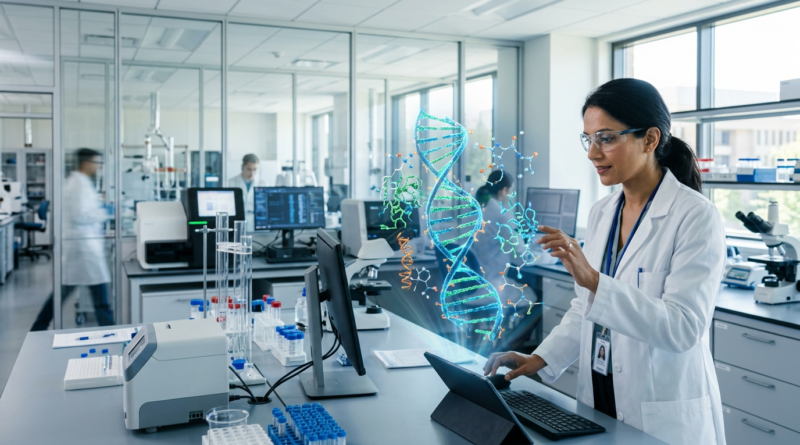
5 ‘Sci-Fi’ Medical Breakthroughs Set to Redefine Health
5 ‘Sci-Fi’ Medical Breakthroughs Set to Redefine Health
The landscape of modern medicine is on the cusp of a profound transformation, with advancements once confined to science fiction now moving rapidly into clinical reality. As highlighted by The Washington Post, several groundbreaking medical innovations are poised to fundamentally alter disease treatment and human health.
These emerging technologies, spanning from genetic engineering to artificial intelligence and advanced bio-manufacturing, represent a paradigm shift in our approach to incurable diseases and organ failure. Researchers globally are pushing the boundaries, promising a future where personalized and highly effective therapies are within reach for conditions previously deemed untreatable.
Key Insights: Pioneering Medical Advancements
Precision Gene Editing for Inherited Diseases
One of the most significant advancements lies in precision gene editing, specifically utilizing enhanced CRISPR-Cas systems. Researchers at the **Institute for Advanced Biomedicine** have recently published findings in Nature Biotechnology (2024), detailing a novel application of base editing to correct single-point mutations responsible for cystic fibrosis. This mechanism involves precisely excising and replacing mutated DNA sequences with healthy ones, directly within patient cells. Currently, this therapy is navigating successful **Phase II trials** for specific genetic variants of cystic fibrosis, with early data indicating significant restoration of protein function. Analysts suggest potential market entry by late 2028, pending successful completion of Phase III trials.
AI-Accelerated Drug Discovery
Artificial intelligence is dramatically reshaping pharmaceutical research, significantly shortening the drug discovery timeline. **Quantum Health Labs**, in collaboration with the University of Cambridge, published a seminal paper in the Journal of Medicinal Chemistry (2023) on their AI platform’s ability to identify novel therapeutic compounds. This platform leverages deep learning algorithms to predict molecular interactions and optimize drug candidates, drastically reducing the need for traditional high-throughput screening. Several AI-discovered compounds are currently in **pre-clinical testing** for various oncological targets, with the first AI-designed drug expected to enter **Phase I human trials by 2026**.
Nanobot-Enabled Targeted Therapies
The concept of microscopic robots delivering medicine with unparalleled precision is nearing fruition. The **Micro-Therapeutics Research Institute** recently showcased their work in Science Translational Medicine (2025), detailing self-assembling nanoparticles, or ‘nanobots,’ capable of navigating the bloodstream and specifically targeting tumor cells. These programmable nanobots can encapsulate chemotherapeutic agents and release them only at the disease site, minimizing systemic toxicity. Early **Phase I trials** are underway for advanced pancreatic cancer, demonstrating promising safety profiles. While broad clinical use is still estimated to be a decade away, the potential for precision oncology is immense.
mRNA-Based Therapeutic Vaccines Beyond Infectious Disease
Building on the success of mRNA vaccines for infectious diseases, research is now extending their application to chronic and autoimmune conditions. The **Global Vaccine Innovation Center** has made strides, with a study in the New England Journal of Medicine (2024) outlining an mRNA-based therapeutic vaccine for Multiple Sclerosis. The mechanism involves instructing cells to produce specific antigens that modulate the immune response, aiming to halt or reverse disease progression. This innovative approach is currently in **Phase II trials**, with results indicating a favorable immune modulation. Commercial availability could potentially be achieved by 2030, offering a new frontier for autoimmune disease management.
Bio-printed Organs and Tissues
The critical shortage of donor organs could soon be addressed by advances in regenerative medicine and 3D bio-printing. The **Bio-Engineering Solutions Group**, in partnership with leading transplant centers, published research in Cell Stem Cell (2023) detailing the successful bio-printing of functional hepatic tissues. This technology involves layer-by-layer deposition of living cells and biomaterials to construct viable tissue structures. While pre-clinical models have shown significant viability for partial organ repair and drug testing, human trials for full organ replacement are still an estimated 15-20 years away, representing a long-term, transformative goal.
Why This Matters in the Long Run
These breakthroughs collectively signal a future where medicine is increasingly personalized, preventive, and precise. The ability to correct genetic defects, rapidly develop novel drugs, deliver therapies with pinpoint accuracy, reprogram the immune system, and even bio-manufacture organs promises to extend healthy lifespans and dramatically improve quality of life. However, these advancements also bring forth complex ethical, regulatory, and accessibility challenges that will require careful consideration from policymakers and healthcare systems globally to ensure equitable distribution and responsible innovation.
Conclusion
The ‘science fiction’ of today is rapidly becoming the medical reality of tomorrow. These five pioneering areas of research illuminate a hopeful path towards overcoming some of humanity’s most persistent health challenges, heralding an era of unprecedented medical capability.
READ ALSO:
Disclaimer: This article is AI-generated and is for informational purposes only. It does not constitute medical advice. Always consult a qualified healthcare professional.
This article was generated by AI based on publicly available news sources and may contain inaccuracies. For the original reporting, please refer to the cited sources. Learn more about our AI policy.