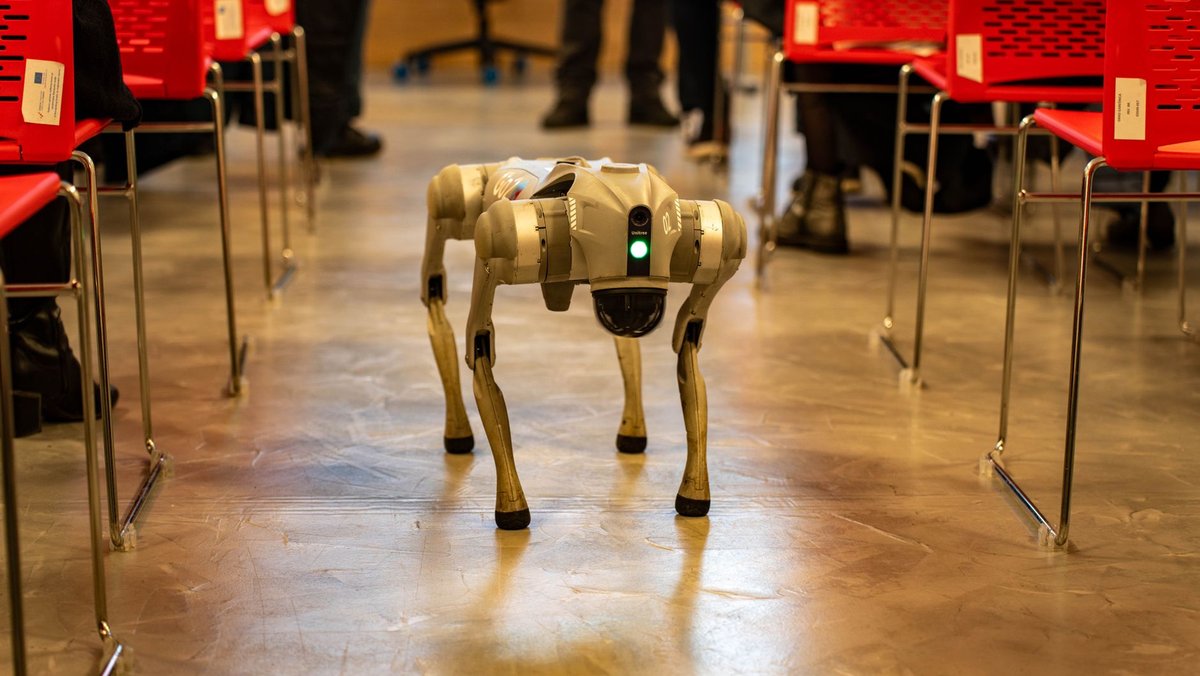
- AI Robotics: Healthcare’s Transformative Leap in 2026
- Health Tech ETF: HTEC’s Enduring Appeal in 2026
- Health Tech ETFs: HTEC’s Enduring Market Relevance in 2026
AI Robotics: Healthcare’s Transformative Leap 2026
By November 2026, the integration of Artificial Intelligence (AI) and robotics has moved beyond theoretical discussions to become a foundational pillar transforming global healthcare delivery. These technologies are no longer nascent tools but established forces, fundamentally reshaping diagnostics, treatment protocols, and operational efficiencies across medical institutions worldwide.
The ongoing transformation, widely noted by industry observers, underscores a paradigm shift in how medical professionals approach patient care and research. From automating routine tasks to powering complex surgical procedures and enabling predictive analytics, AI and robotics are at the forefront of a new era in medicine, promising enhanced precision and accessibility.
Precision Diagnostics and Personalized Treatment
AI’s analytical capabilities have significantly advanced diagnostic accuracy. Machine learning algorithms, trained on vast datasets of medical images and patient records, now assist clinicians in identifying subtle indicators of disease, often earlier and with greater consistency than traditional methods. This is particularly evident in fields like radiology and pathology, where AI-powered systems can flag anomalies in scans and tissue samples, augmenting human expertise. The societal impact is profound: earlier detection leads to more effective interventions and improved patient outcomes.
Concurrently, robotics has revolutionized surgical procedures, enabling minimally invasive techniques that reduce recovery times and patient discomfort. Robotic-assisted surgery, once a niche application, is now a standard offering in many advanced medical centers globally. Beyond the operating theatre, AI is facilitating truly personalized medicine, analyzing individual genomic data, lifestyle factors, and treatment responses to tailor therapeutic regimens that are optimally effective for each patient, minimizing adverse reactions and maximizing efficacy.
Operational Efficiencies and Patient Care
The impact extends beyond direct patient care to the operational backbone of healthcare systems. AI-driven solutions are streamlining administrative tasks, optimizing hospital resource allocation, and managing supply chains with unprecedented efficiency. This reduces operational costs and frees up medical staff to focus on critical patient interactions, addressing long-standing challenges of burnout and resource strain within the healthcare sector. Furthermore, robotic systems are increasingly deployed for tasks such as dispensing medications, sterilizing equipment, and assisting with patient mobility, enhancing safety and reducing human error.
Key Analysis: Societal and Ethical Implications
While the benefits are clear, the widespread adoption of AI and robotics in healthcare also brings critical ethical considerations to the forefront. Issues surrounding data privacy, algorithmic bias in diagnostic tools, and the potential for job displacement among certain healthcare roles require ongoing scrutiny and robust regulatory frameworks. Global labs and research institutions, including those at Stanford and MIT, are actively engaged in developing ethical guidelines and transparent AI models to ensure equitable access and prevent unintended consequences. The global market implications are vast, driving significant investment into health tech startups and established medical device manufacturers, creating new economic sectors while necessitating careful policy development to manage these rapid advancements responsibly.
Why This Matters in the Long Run
The sustained integration of AI and robotics into healthcare represents more than just technological upgrades; it signifies a fundamental redefinition of human health potential. In the long run, these advancements promise to make high-quality, personalized healthcare more accessible globally, potentially narrowing the gap in health outcomes between developed and developing nations. The ability to leverage predictive analytics for public health management, rapidly develop new therapies, and deliver precision interventions lays the groundwork for a future where chronic diseases are better managed, and life expectancies continue to rise. This ongoing transformation will continue to drive medical research paradigms, fostering interdisciplinary collaboration between computer science, engineering, and clinical medicine to tackle humanity’s most complex health challenges.
As AI and robotics continue their inexorable march into every facet of medicine, the imperative remains to balance innovation with ethical oversight, ensuring these powerful tools serve humanity’s collective well-being.
Image Credit: Photo by Tara Winstead on Pexels