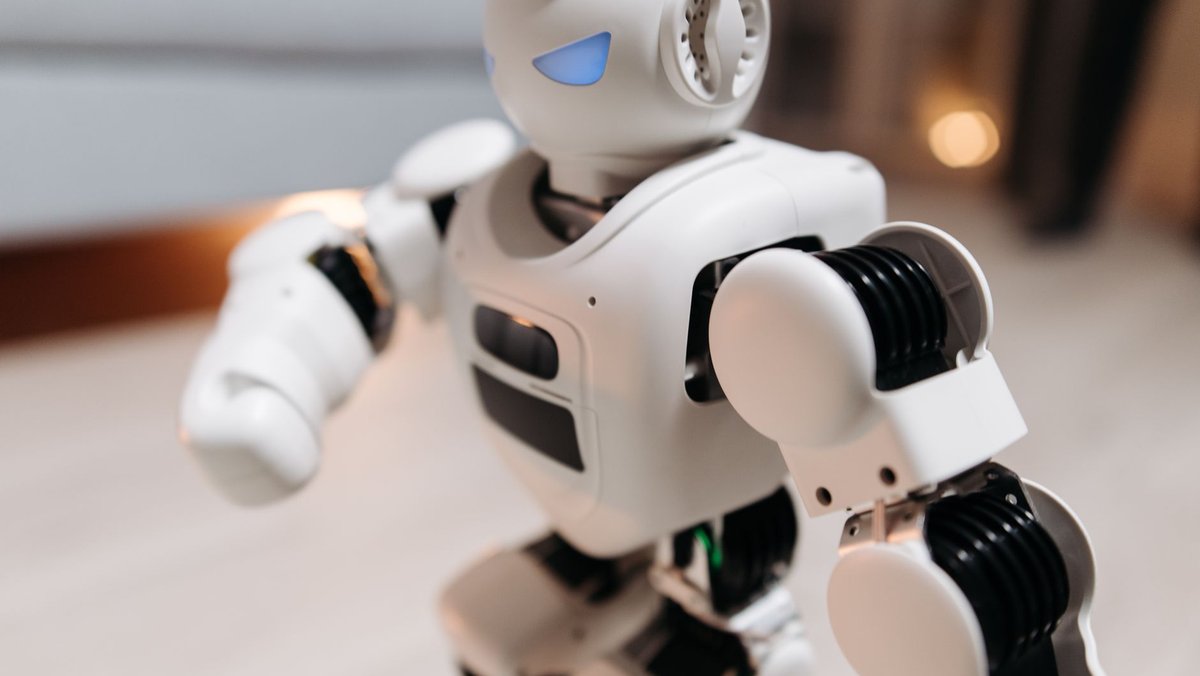
In a development that once felt confined to science fiction, the sight of a humanoid robot diligently cleaning a private residence has transitioned from concept to an emerging reality. An account published by MIT Technology Review, reflecting on an experience likely from late 2024 or early 2025, vividly described a journalist witnessing a bipedal robot meticulously tidying an apartment, a moment hailed as a tangible glimpse into the future of domestic automation.
This early demonstration, while perhaps not yet a widespread consumer product, served as a significant waypoint in the journey towards pervasive robotic assistance. The report highlighted the intricate movements and surprising efficacy of the machine, underscoring the rapid advancements in robotics and artificial intelligence that have brought such capabilities to fruition. It wasn’t merely a vacuum cleaner; it was a dexterous, multi-tasking entity navigating a complex human environment.
Key Analysis: The Ascent of Domestic Humanoids
The experience chronicled by MIT Technology Review in what was then the near future, and is now the recent past, underscored a pivotal shift in robotics. The evolution from industrial arms confined to factory floors to mobile, dexterous platforms capable of navigating unstructured home environments is a testament to breakthroughs across multiple disciplines. Research institutions like Stanford University, Carnegie Mellon, and DeepMind, alongside burgeoning robotics startups such as Boston Dynamics and Agility Robotics, have been instrumental in developing sophisticated AI algorithms for perception, navigation, and manipulation. These advancements include enhanced computer vision for object recognition, advanced reinforcement learning for task execution, and improved haptic feedback for delicate handling. The challenge of creating robots that can safely and efficiently operate in dynamic, unpredictable human spaces—identifying and avoiding obstacles, understanding human intent, and performing tasks requiring fine motor skills—is being progressively overcome.
The implications of such advancements are profound, extending beyond mere convenience. On the one hand, domestic humanoid robots promise to alleviate household burdens, offering invaluable assistance to the elderly, individuals with disabilities, and busy professionals. This could redefine the nature of home care, personal assistance, and even education. On the other hand, the advent of these intelligent machines raises critical societal questions concerning job displacement in sectors traditionally reliant on human labor, such as cleaning, logistics, and caregiving. Ethical frameworks for privacy, data security (especially with onboard cameras and sensors), and human-robot interaction are simultaneously evolving, as governments and international bodies grapple with regulating this nascent technology. The market, though still in its nascent stages, is attracting significant venture capital and strategic investments, with analysts predicting substantial growth as manufacturing scales and unit costs decrease, potentially reaching mass-market accessibility within the next decade.
Why This Matters in the Long Run
The vision of a humanoid robot cleaning an apartment, once a futuristic fantasy, now represents a crucial step in the broader integration of AI and robotics into daily life. This trend is not merely about convenience; it signifies a fundamental shift in how humans interact with technology, potentially leading to smarter, more efficient homes and workplaces. In the long term, the widespread adoption of domestic humanoid robots could reshape urban planning, influence architectural design (to accommodate robotic movement and charging), and necessitate new skill sets in the workforce. It also pushes the boundaries of artificial general intelligence, as these machines learn to adapt and perform an ever-expanding array of tasks, fundamentally altering our understanding of labor, leisure, and companionship.
As we look forward from late 2026, the initial “taste of the future” reported by MIT Technology Review has matured into a palpable technological trajectory. The journey from demonstration to ubiquitous presence is still ongoing, but the direction is clear: humanoid robots are increasingly becoming an integral part of our domestic landscape.
Image Credit: Photo by Pavel Danilyuk on Pexels