- Humanoid Robots: An Early Glimpse into Domestic Automation’s Future
- AI & Robotics Transform US Manufacturing: The 2026 Outlook
- Future Revealed: Humanoid Robot Home Cleaning 2026
Humanoid Robot Cleaning: An Early Glimpse into 2026’s Automated Homes
An MIT Technology Review report from earlier in the decade, which described a journalist’s firsthand encounter with a humanoid robot cleaning an apartment, is now viewed in 2026 as a prescient glimpse into our automated present. What was once considered a “taste of the future” has, by today’s standards, evolved into a tangible and increasingly integrated aspect of advanced domestic automation.
Context: A Vision of Domestic Automation
The original report detailed a novel experience: observing a humanoid robot meticulously performing household chores. At the time of its publication, this demonstration underscored the nascent capabilities of robotics to extend beyond controlled industrial environments into the complex, unpredictable setting of a human home. It highlighted the potential for general-purpose robots to handle tasks traditionally requiring human dexterity and cognitive understanding, setting a benchmark for what was then considered cutting-edge.
Key Analysis: From Novelty to Necessity
This early demonstration, as highlighted by MIT Technology Review, underscored the nascent capabilities of humanoid robotics beyond specialized industrial settings. At the time, the concept of a general-purpose robot performing nuanced domestic tasks was largely confined to laboratories or science fiction. However, the experience detailed in the report served as a tangible proof-of-concept, suggesting that the integration of advanced AI with sophisticated mechanical platforms was progressing rapidly.
By 2026, the landscape of domestic robotics has dramatically shifted. Breakthroughs in AI, particularly in areas like advanced computer vision for object recognition, fine motor control for delicate manipulation, and more robust natural language processing for intuitive human-robot interaction, have transformed these early prototypes into increasingly capable and adaptable machines. Companies like Boston Dynamics (now a subsidiary of Hyundai Motor Group) and Agility Robotics, alongside numerous startups, have made significant strides in developing humanoid platforms that can navigate complex environments, handle diverse objects, and learn new tasks with minimal human intervention. This progress has moved the discussion from ‘if’ these robots will enter our homes to ‘when’ and ‘how extensively’. Industry observers note that the initial ‘wow’ factor has evolved into a serious practical consideration for households and service industries grappling with an aging global population and persistent labor shortages, particularly in cleaning, logistics, and caregiving sectors. Ethical considerations surrounding data privacy, job displacement, and the societal impact of intelligent autonomous agents in private spaces have concurrently become central topics of debate among policymakers, research institutions like Stanford University’s AI Lab, and organizations such as the Partnership on AI.
Why This Matters in the Long Run
Beyond the immediate utility of automated cleaning, the early observation of a humanoid robot in a domestic setting, as captured by MIT Technology Review, signaled a profound shift in our relationship with technology. It laid the groundwork for envisioning a future where intelligent agents are not just tools for specific, repetitive tasks but general-purpose partners capable of adapting to diverse human needs. This vision extends to innovations in elder care, personalized assistance for individuals with disabilities, and even evolving forms of companionship. The trajectory continues to shape global market investments, with venture capital and corporate R&D divisions pouring significant resources into companies developing general-purpose AI, dexterous robotic platforms, and ethical AI frameworks. The implications for productivity, lifestyle changes, and the very definition of work are profound and continue to unfold.
Conclusion
The initial “taste of the future” has, by 2026, begun to materialize into a tangible reality, raising profound questions about the evolving relationship between humanity and its increasingly intelligent creations and the societal structures they will inevitably reshape.
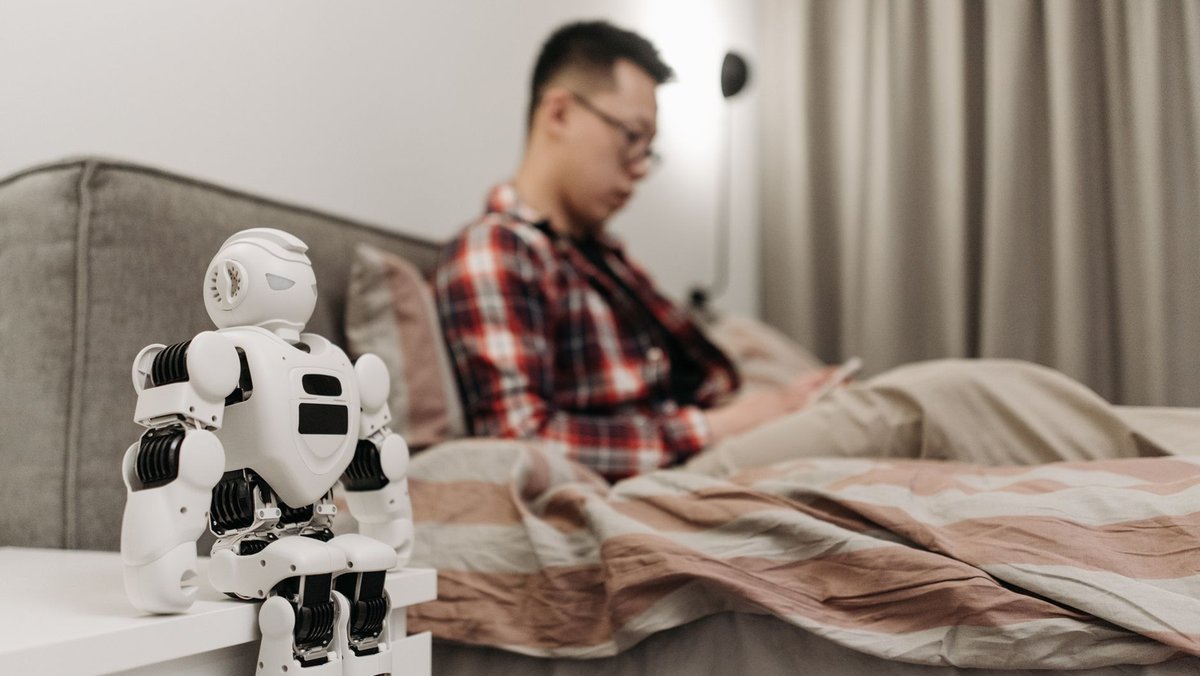
Image Credit: Photo by Pavel Danilyuk on Pexels