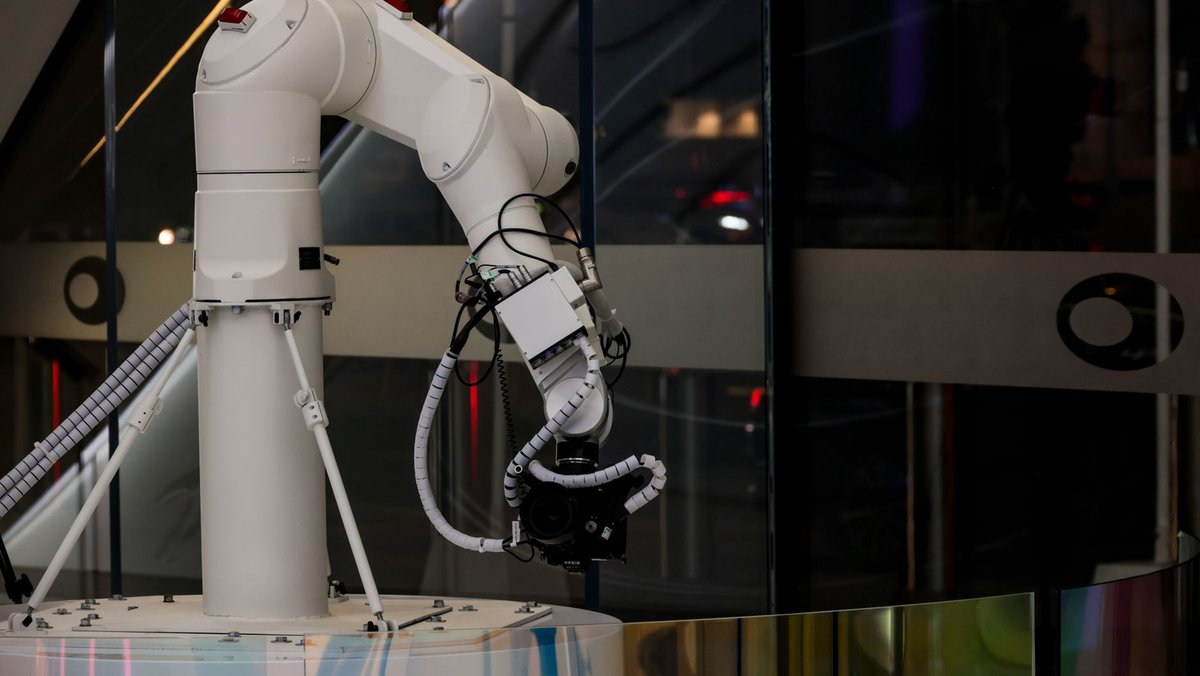
- AI Robotics: Pioneering Journeys Shape 2026 Future
- AI Speakers 2027: Forecasting the Future of Artificial Intelligence
- NASA’s Super Intelligence Initiative: Redefining Cosmic Exploration
NASA’s Engagement with Super Intelligence: A 2026 Perspective
As of October 31, 2026, NASA, the United States’ premier space agency, continues to signal its deep engagement with the theoretical and practical implications of ‘Super Intelligence’. While specific project details remain under wraps, the very discussion originating from a .gov domain underscores the serious consideration given to Artificial Superintelligence (ASI) within governmental and scientific frameworks.
Context: Defining Super Intelligence in 2026
Super Intelligence refers to a hypothetical intellect that is vastly smarter than the best human brains in practically every field, including scientific creativity, general wisdom, and social skills. For an institution like NASA, known for pushing the boundaries of human knowledge and technological capability, the concept of ASI represents a potential paradigm shift. This ongoing discourse within NASA, as indicated by its official digital presence, reflects a broader global scientific community grappling with the future trajectory of AI beyond current Artificial General Intelligence (AGI) research.
Key Analysis: Why Super Intelligence Matters to NASA
NASA’s interest in Super Intelligence is multi-faceted, extending beyond conventional AI applications. Such an advanced intelligence could theoretically revolutionize every aspect of space exploration and scientific discovery:
- Autonomous Deep Space Missions: ASI could manage complex, multi-decade missions to distant star systems, making real-time, optimal decisions far beyond human capacity, adapting to unforeseen cosmic phenomena, and conducting advanced scientific inquiry without human intervention.
- Data Synthesis and Discovery: The sheer volume of astronomical data from telescopes like the James Webb Space Telescope and future observatories is already immense. A Super Intelligence could process, synthesize, and derive novel scientific theories from this data at an unprecedented scale, potentially uncovering fundamental laws of the universe.
- Resource Optimization and Engineering: Designing and maintaining extraterrestrial habitats, terraforming planets, or mining asteroids would require computational and strategic capabilities that ASI could provide, optimizing resource allocation and engineering solutions across vast distances and extreme environments.
While current AI research from institutions like DeepMind and OpenAI focuses on advancing AGI, NASA’s public discourse on ‘Super Intelligence’ suggests a forward-looking perspective, anticipating the next frontier of intelligent systems and their potential role in humanity’s cosmic endeavors.
Why This Matters in the Long Run
NASA’s engagement with the concept of Super Intelligence signifies a critical juncture in the convergence of AI development and humanity’s future in space. It moves beyond merely using AI as a tool to envisioning it as a potential partner, or even architect, in our most ambitious interstellar goals. This long-term view necessitates not only technological advancement but also robust ethical frameworks, safety protocols, and philosophical considerations regarding the creation and deployment of intelligence that could surpass human comprehension. The discussions initiated by leading scientific bodies like NASA are crucial in shaping the global dialogue around responsible AI development for the coming centuries.
The theoretical exploration of Super Intelligence by NASA underscores a future where the boundaries of human and artificial capability become increasingly blurred in the pursuit of understanding the cosmos.
Image Credit: Photo by Tara Winstead on Pexels