
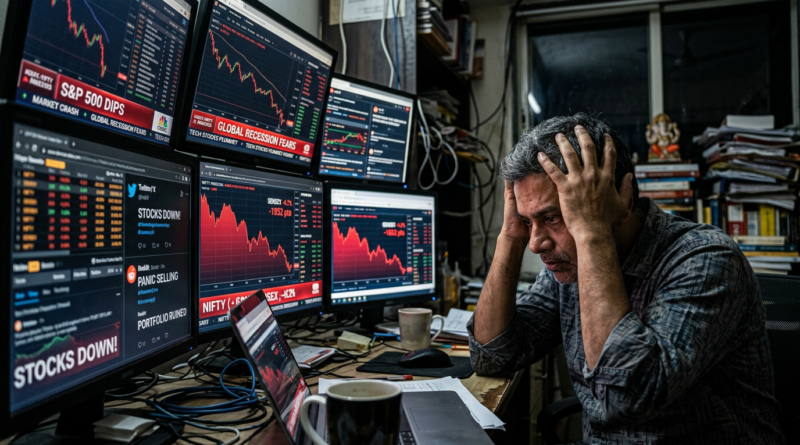
Information Overload: Why Too Much News Hurts Indian Investors

Information Overload: Why Too Much News Hurts Indian Investors
An increasing deluge of stock market news, real-time data, and unsolicited ‘tips’ is proving detrimental to the performance of Indian investors, an expert has warned in a report by NDTV. This paradox of information suggests that more data is not translating into better investment decisions, but rather fostering reactive, and often loss-making, behavior.
The warning comes amidst a period of unprecedented retail investor participation in the Indian equity markets, a trend accelerated by digital brokerage platforms and accessible mobile trading. While democratizing access to the markets, this has also created an ecosystem saturated with constant commentary, analysis, and speculation from countless sources, including social media ‘finfluencers’, television channels, and messaging groups. This environment, according to industry observers, is amplifying behavioral biases and undermining long-term wealth creation strategies.
Key Analysis: The Noise vs. Signal Dilemma
The core issue highlighted is the investor’s inability to distinguish between market ‘noise’ and actionable ‘signal’. Constant exposure to price fluctuations, expert opinions, and breaking news can trigger two primary behavioral traps:
- Analysis Paralysis: Faced with contradictory information and an overwhelming number of variables, investors can become frozen, unable to make a decision.
- Reactive Trading: Conversely, many are spurred into frequent trading based on short-term news flow. This often leads to buying high during a rally driven by hype (Fear of Missing Out – FOMO) and selling low during a panic-induced correction, fundamentally opposing the ‘buy low, sell high’ principle.
The Proliferation of Unverified Tips
A significant factor contributing to this problem is the rise of unregistered financial influencers. The Securities and Exchange Board of India (SEBI) has repeatedly issued warnings and proposed stricter regulations for these ‘finfluencers’ who dispense stock-specific advice without proper qualifications or accountability. As noted in the report, these tips often encourage speculative, high-risk trades that can lead to significant capital erosion for unsuspecting investors who mistake social media popularity for financial expertise.
Why This Matters in the Long Run
In the long term, this trend of information-driven herd behavior poses a systemic risk. It can increase market volatility as large numbers of retail investors react in unison to news triggers, causing sharp, sentiment-driven swings that are disconnected from fundamental valuations. For the individual, it erodes the discipline required for successful long-term investing, which relies on goal-based planning, asset allocation, and patience rather than attempts to time the market based on daily noise. The challenge for regulators like SEBI and platforms on the National Stock Exchange (NSE) and Bombay Stock Exchange (BSE) is to foster financial literacy that equips investors to navigate this complex information landscape effectively.
Ultimately, the expert’s warning serves as a critical reminder for investors to cultivate a disciplined approach, focusing on fundamental research and long-term financial goals over the distracting chatter of the daily market cycle.
Disclaimer: This article is AI-generated and is for informational purposes only. It does not constitute financial, investment, or legal advice. Always consult a qualified professional before making financial decisions.
This article was generated by AI based on publicly available news sources and may contain inaccuracies. For the original reporting, please refer to the cited sources. Learn more about our AI policy.