
India news: PM Modi leaves for Central Asian tour – dw.com
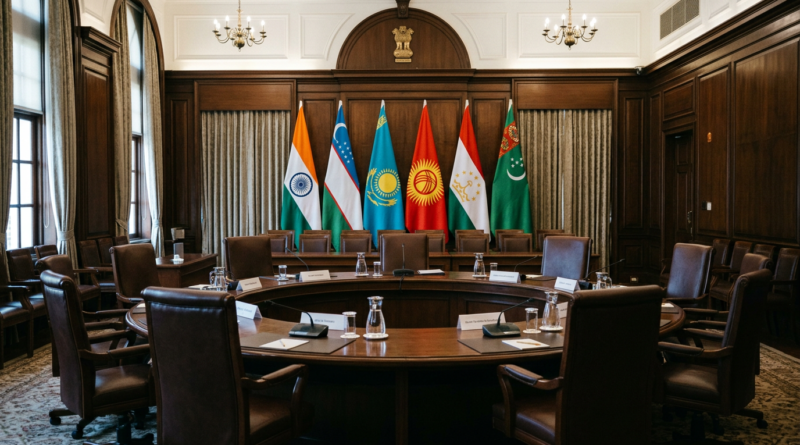
Prime Minister Narendra Modi has departed on a significant multi-nation tour of Central Asia, a region of immense strategic importance to India. The diplomatic mission will see the Prime Minister visit all five Central Asian republics: Uzbekistan, Kazakhstan, Turkmenistan, Kyrgyzstan, and Tajikistan. This marks a major push in India’s ‘Connect Central Asia’ policy, aimed at re-energizing historical ties and forging new partnerships in what India considers its extended neighborhood.
Officially, the agenda is packed with high-stakes discussions on energy, security, and connectivity. Key among these are talks aimed at advancing the Turkmenistan-Afghanistan-Pakistan-India (TAPI) gas pipeline and enhancing India’s role in the International North-South Transport Corridor (INSTC). Furthermore, with shared concerns over regional stability and the threat of terrorism, security cooperation is expected to be a cornerstone of the bilateral meetings in each capital. While the tour is framed as a pivotal foreign policy endeavor, its domestic political implications, particularly in the context of Indian elections, are equally profound.
Beyond Geopolitics: The Electoral Calculus of the Tour
While the tour’s diplomatic objectives are clear, its timing and scale carry significant weight within the domestic political arena, making it a crucial event in the context of Indian elections. For the ruling party, high-profile foreign visits are a powerful tool for shaping public perception and reinforcing the Prime Minister’s image as a strong, decisive global leader. This carefully cultivated image of statesmanship is a central pillar of the party’s electoral strategy, resonating with a large segment of the electorate that values a robust national presence on the world stage.
The narrative being projected back home is one of a government actively working to secure India’s future. The complex geopolitics of energy pipelines are translated into a simple, powerful message for voters: a promise of long-term energy security and potentially stable prices. Similarly, discussions on trade routes and connectivity are framed as initiatives that will create jobs and boost the economy. While the exact value of prospective trade and investment deals is based on figures not yet confirmed, the political messaging emphasizes the potential for widespread economic benefit. Each handshake and signed memorandum is broadcast as a victory for India, directly attributable to the Prime Minister’s leadership.
Fulfilling the Mandate, Countering the Critics
This diplomatic outreach also serves as a visible fulfillment of the ruling party’s electoral manifesto, which often promises to restore India’s influence and build a more assertive foreign policy. The tour acts as tangible proof of the government delivering on its promises, a key talking point in any future election campaign. However, the move is not without its critics. Opposition parties and some political analysts are likely to question the immediate, tangible benefits of such tours for the average citizen. They may frame it as ‘event management’ and a distraction from pressing domestic issues, arguing that the focus should be on internal challenges rather than foreign photo opportunities. This counter-narrative highlights the perennial debate in Indian politics over the allocation of government focus and resources, a debate that intensifies in the run-up to elections.
Ultimately, the Prime Minister’s Central Asian tour is a textbook example of how foreign policy and domestic politics are increasingly intertwined. It is a dual-purpose mission: one aimed at securing India’s strategic interests in its extended neighborhood, and another, equally important, aimed at consolidating political capital and strengthening the ruling party’s narrative ahead of future electoral contests.
Frequently Asked Questions
What was the main goal of the 2015 Central Asia tour?
The primary goal was to reinvigorate India’s ‘Connect Central Asia’ policy, focusing on energy security, enhancing trade routes, and building strategic and security cooperation in the region.
What were some key projects discussed during the tour?
Major infrastructure and energy projects like the TAPI (Turkmenistan-Afghanistan-Pakistan-India) gas pipeline and improving connectivity via the International North-South Transport Corridor (INSTC) were central to discussions.
How has India’s engagement with Central Asia evolved since 2015?
Engagement has become more institutionalized, notably through the establishment of the India-Central Asia Dialogue at the Foreign Ministers’ level and the first-ever India-Central Asia Summit, creating regular platforms for high-level cooperation.
This article was generated by AI based on publicly available news sources and may contain inaccuracies. For the original reporting, please refer to the cited sources. Learn more about our AI policy.