
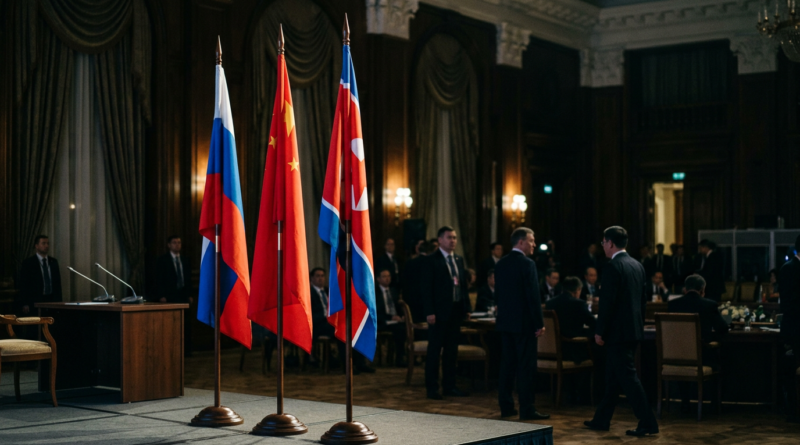
The Russia-China-North Korea Axis: A 2026 Retrospective Analysis
From the desk of The Intelligence Ledger, August 29, 2026.
The strategic alignment between Russia, China, and North Korea, a subject of intense analysis in the mid-2020s, has since solidified into a defining feature of the global geopolitical landscape. This trilateral partnership, born from a confluence of strategic imperatives, continues to reshape international relations and challenge the post-Cold War order.
A look back at reporting from sources like Modern Diplomacy in previous years reveals the early contours of this bloc. The partnership was forged not on shared ideology but on pragmatic, converging interests. For Russia, facing sustained diplomatic and economic isolation following its actions in Ukraine, the alignment offered a vital lifeline. For China, engaged in systemic competition with the United States, it provided a northern flank of strategic depth. For North Korea, it represented a powerful shield against international pressure and sanctions, particularly at the United Nations Security Council, where both Moscow and Beijing hold veto power.
Key Analysis: An Axis of Convenience
From the perspective of Moscow, Beijing, and Pyongyang, this cooperation is a defensive measure against what they characterize as Western encirclement. They point to the expansion of NATO in Europe and the formation of security pacts like AUKUS in the Indo-Pacific as justification for a closer defense partnership. This narrative frames their alignment as a necessary counterbalance to a US-dominated global security architecture.
Conversely, Western capitals and their allies view this development with significant alarm. The prevailing analysis within NATO and G7 circles is that this constitutes an “axis of authoritarians” intent on undermining the rules-based international order. Key concerns that have materialized since the mid-2020s include the potential for coordinated military technology transfers, joint efforts to circumvent international sanctions, and the strategic challenge of facing synchronized pressure in both the Euro-Atlantic and Indo-Pacific theaters.
The View from the Global South
For many nations, particularly influential members of blocs like BRICS and the Non-Aligned Movement, this trilateral axis presents a complex dilemma. While it offers an alternative pole of influence to the Western-led system, it also heightens the risk of a new era of great power competition. These nations navigate a delicate balancing act, seeking to maintain beneficial economic and diplomatic ties with all sides without being drawn into escalating rivalries.
Why This Matters in the Long Run
The long-term impact of the Russia-China-North Korea partnership, once a matter of speculation, is now evident in 2026. It has accelerated the fragmentation of global governance, most notably weakening the consensus-driven mechanisms of the UN Security Council. This has had direct consequences for international non-proliferation regimes, as concerted action against North Korea’s continued weapons development has become increasingly difficult. The alignment has also forced a strategic recalibration among US allies, leading to increased defense spending and closer security cooperation between nations like Japan, South Korea, and Australia.
The trajectory outlined in analyses from years past has largely been validated. What began as a partnership of convenience has evolved into a durable strategic bloc, fundamentally altering the calculus of global power politics for the foreseeable future.
Frequently Asked Questions
What was the primary motivation for the Russia-China-North Korea partnership?
The partnership was primarily driven by a shared strategic interest in countering US global influence and what they perceived as a Western-led international order hostile to their respective governments.
How did international bodies like NATO react to this emerging alliance?
Western alliances like NATO and US partners in the Indo-Pacific viewed the partnership as a significant security challenge, often referring to it as an ‘axis of authoritarians’ aimed at destabilizing the global order.
Is the Russia-China-North Korea partnership a formal military alliance?
The analysis suggests it is a strategic alignment and defense partnership of convenience, rather than a formal, treaty-bound military alliance with mutual defense clauses like NATO.
This article was generated by AI based on publicly available news sources and may contain inaccuracies. For the original reporting, please refer to the cited sources. Learn more about our AI policy.