
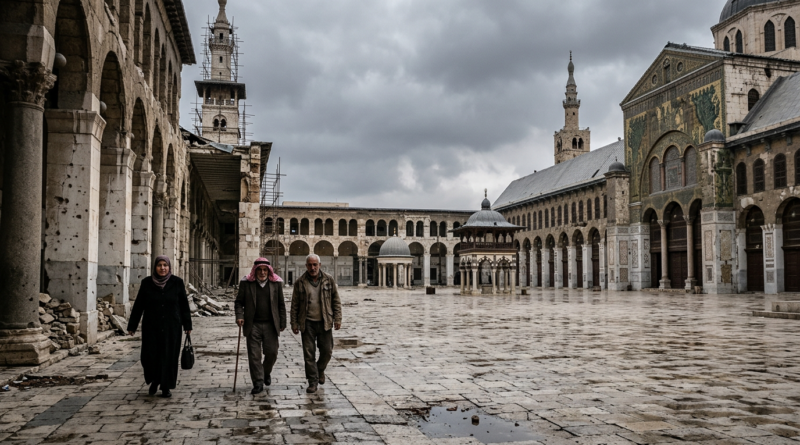
Syria’s Frozen Conflict: A 2026 Geopolitical Stalemate Analysis
Fifteen years after the initial uprising, Syria remains a fractured nation and a focal point of intricate geopolitical competition. As of August 2026, the country is less a unified state and more a complex patchwork of territories under the influence of domestic factions and their powerful international backers, with no viable, comprehensive peace settlement in sight.
The conflict, which began with anti-government protests in March 2011, has evolved into a protracted, multi-sided war. According to analysis from institutions like the Council on Foreign Relations, the active combat has subsided into a so-called “frozen conflict,” but one punctuated by persistent instability. The government of President Bashar al-Assad, with critical military support from Russia and Iran, controls the most populous areas, including Damascus, Aleppo, and the Mediterranean coast. However, significant portions of the country remain outside its grasp. The north and northwest are largely under the control of Turkish-backed opposition groups, while the northeast, rich in oil and agricultural resources, is administered by the Kurdish-led Syrian Democratic Forces (SDF), who are supported by a contingent of United States forces.
Key Analysis: A Chessboard of Competing Interests
The Syrian theatre continues to be an arena for competing global and regional power objectives. Diplomatic efforts, including the UN-facilitated Geneva process, have long been stalled. The Astana process, led by Russia, Turkey, and Iran, has been more effective at managing de-escalation zones and codifying spheres of influence than at forging a lasting political resolution.
The Great Powers’ Endgame
From the perspective of 2026, the motivations of external actors have solidified:
- Russia: Moscow’s primary goal remains the preservation of the Assad government to secure its strategic military assets, notably the Tartus naval base. It seeks to cement its role as the key power broker in the Levant.
- United States: Washington’s policy is focused on two main pillars: preventing a resurgence of ISIS and containing Iranian influence. Its military presence in the northeast serves both objectives by supporting the SDF, which acts as a counter-terrorism force and a bulwark against Iranian expansion.
- Turkey: Ankara’s strategic imperative is to prevent the formation of an autonomous Kurdish entity along its southern border. It maintains a significant military presence in northern Syria to support allied militias and manage the millions of Syrian refugees it hosts.
- Iran: Tehran views Syria as a crucial link in its “Axis of Resistance,” a land bridge connecting it to its ally Hezbollah in Lebanon. It continues to embed its military advisors and proxy militias throughout government-held territory.
- Israel: Concerned by Iran’s entrenchment, Israel regularly conducts airstrikes on Iranian-linked targets and weapons convoys within Syria, an activity that continues to risk broader escalation.
Why This Matters in the Long Run
The Syrian conflict serves as a stark case study in 21st-century warfare, where great power competition, proxy forces, and humanitarian crises converge. The de facto partitioning of the country by international powers sets a dangerous precedent for state sovereignty. The diplomatic normalization that began with Syria’s readmission to the Arab League in 2023 has failed to translate into meaningful reconstruction, economic recovery, or political reform. The country remains devastated, with a majority of its pre-war population displaced or in need of humanitarian aid, a situation exacerbated by the catastrophic earthquake of 2023 and crippling international sanctions. The risk of accidental clashes between the major powers operating in close proximity—particularly US, Russian, and Israeli forces—remains a constant threat to regional stability.
Ultimately, as we observe in late 2026, Syria is not on a path to recovery but is locked in an indefinite geopolitical stalemate. The absence of a unified international will to forge a genuine peace ensures that the Syrian people will continue to bear the cost of this enduring global rivalry.
Frequently Asked Questions
What is the status of the Syrian conflict as of August 2026?
As of August 2026, the Syrian conflict is largely a ‘frozen’ but unstable situation, with the country divided into zones of control held by the Assad government, Turkish-backed forces, and the US-supported SDF.
Which major foreign powers are still involved in Syria?
Key foreign actors include Russia and Iran supporting the Assad regime, the United States supporting the SDF in the northeast, Turkey controlling areas in the north, and Israel conducting regular airstrikes.
Has the Syrian government been diplomatically reintegrated into the region?
While the Assad government was readmitted to the Arab League in 2023, this has not resolved the underlying conflict, ended international sanctions, or led to a unified political solution for the country.
This article was generated by AI based on publicly available news sources and may contain inaccuracies. For the original reporting, please refer to the cited sources. Learn more about our AI policy.